A motion lamp is a small object with an unusually visible job. You notice its outline across the room, its color on the way past and its changing shapes when you sit nearby. Choosing one is partly about the finish you love and partly about knowing what that lamp will actually do in your space.
Start with the effect, then the color, then the location. That order helps separate three decisions that can otherwise blur together. A glitter globe is not simply a different color of wax lamp. A pink base does not necessarily mean pink wax. And a lamp that looks compact in a photograph still needs a suitable surface, a reachable outlet and clear space around it.
This guide focuses on our current 14.5-inch selection. It brings together practical shopping questions and general placement ideas, with links to exact models so you can compare their own photographs. For operating limits, bulb replacement and model-specific safety information, always follow the instructions supplied with your lamp.
Start with the kind of motion
Wax and glitter offer two different things to watch. A wax lamp forms larger shapes as its contents warm and move. A glitter lamp shows many small reflective particles. Both can add color to a room, but the visual rhythm is different. Decide which effect you are looking for before you get attached to a particular base finish.
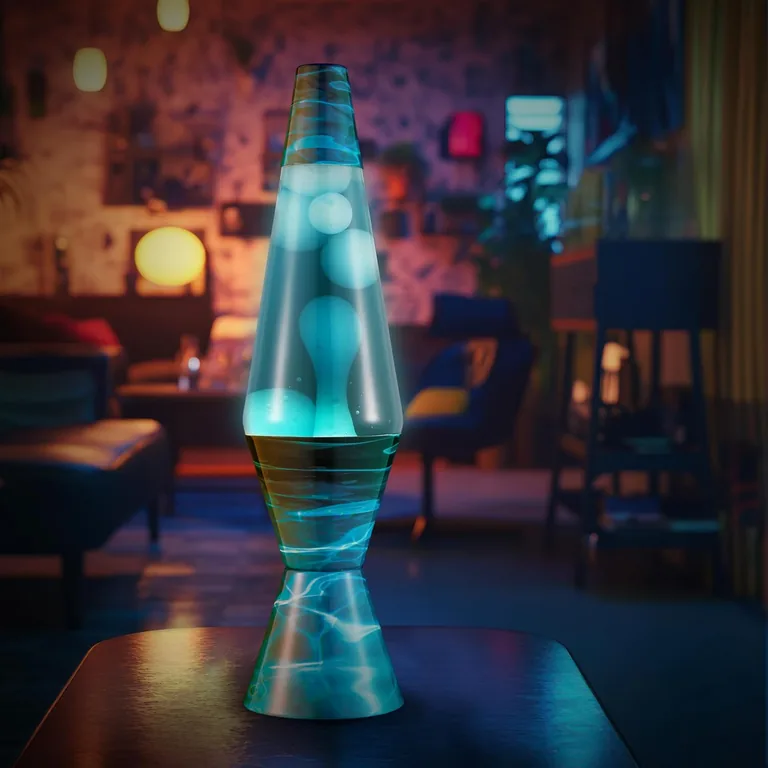
Choose wax if the familiar, slowly changing shapes are what brought you here. There is no fixed arrangement to preserve: the appeal is the movement and the way forms change as the lamp operates. A still product photograph can show the color and a moment in that process, but it cannot promise that the wax will always make those exact shapes.
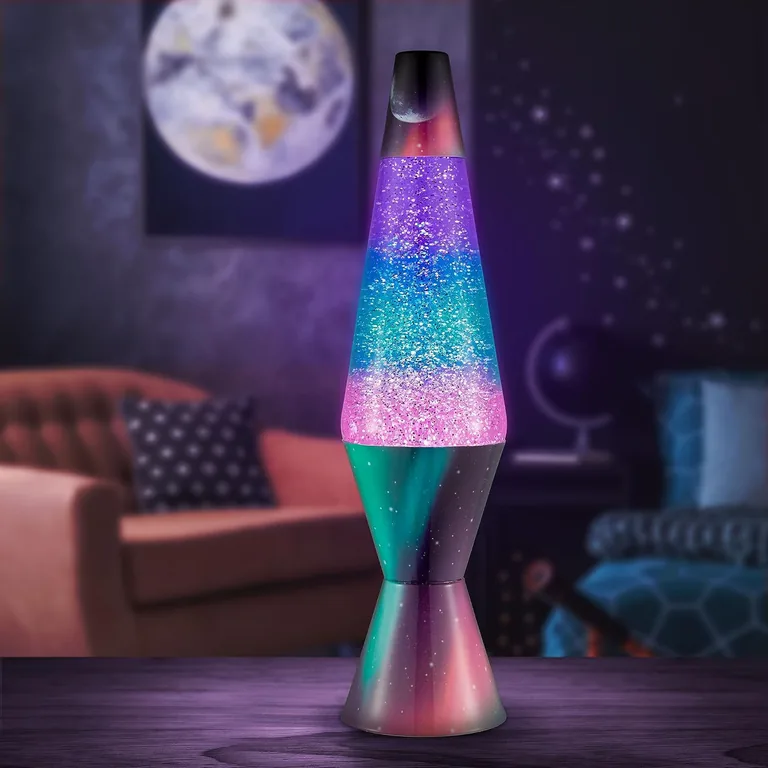
Choose glitter if small reflections are the main attraction. Polar Glimmer pairs silver glitter with a multicolor globe and coordinating base. Its sparkle is different from the large forms inside a wax lamp. Do not use the warm-up behavior of a wax model as the expectation for a glitter model; read the instructions for the lamp you actually choose.
| Choice | What you see | Good starting point |
|---|---|---|
| Wax motion | Larger shapes rising and falling after warm-up | Black Iris, Night Swim or Gray Stratosphere |
| Glitter motion | Small reflective particles in a colorful globe | Polar Glimmer |
Neither effect should be mistaken for task lighting. A motion lamp is a decorative accent to look at and enjoy. Keep a separate reading light beside a chair or a suitable desk light where you work. That lets the motion lamp contribute atmosphere without asking it to illuminate a book, a work surface or an entire room.
Read the whole color combination
A lamp’s name is only the start of its color story. Look at the wax or glitter, the liquid, the glass treatment, and the base and cap. These parts work together when illuminated. Comparing them separately is especially useful when you are trying to match a room or buy a very specific color for someone else.
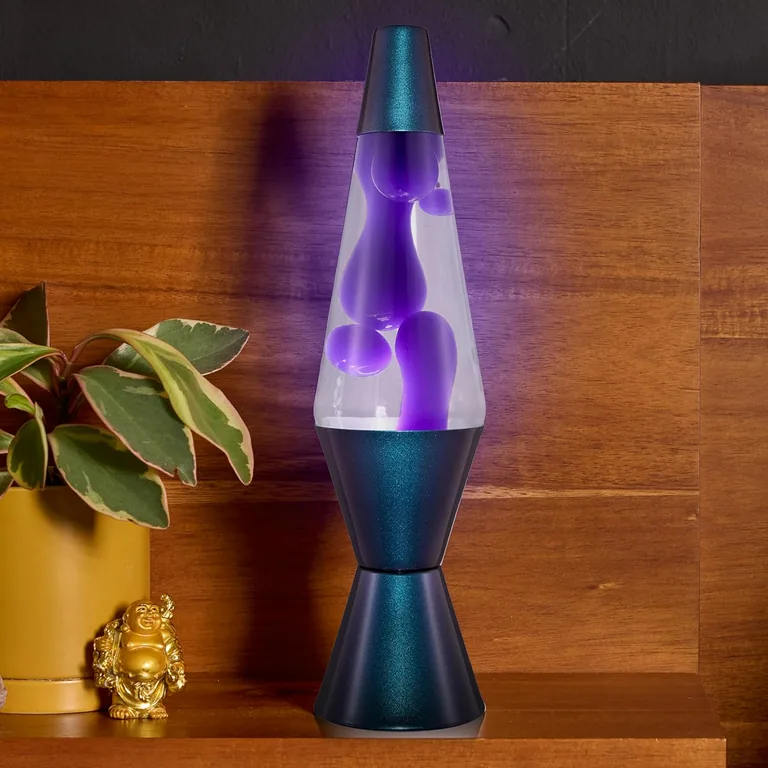
Black Iris, for example, places purple wax in clear liquid. That gives the wax a distinct role in the view. Night Swim uses white wax in ocean-blue liquid, while Gunmetal Grey combines white wax with a tricolor globe. All three create a colorful effect, but they arrive there in different ways.
Colored liquid can change the apparent color of the wax seen through it. Neon Pink has yellow wax and blue liquid; the illuminated photographs show a greener appearance inside the globe. That does not turn the base into a green finish. The neon-pink base, the liquid color and the viewed wax remain separate parts of the same lamp.
Compare more than one photograph before deciding. The complete lamp tells you about the overall balance. A close-up reveals the finish, printed pattern and glass detail. A room photograph helps you imagine the relationship between the lamp and surrounding objects, while a dimensional image gives information that a styled scene cannot provide reliably.
Screen settings and room lighting also influence what you see. If a precise match to a painted wall or fabric is essential, treat product photographs as a guide rather than a physical color sample. A slightly contrasting color is often easier to plan around than a near-match that depends on every screen and light source looking the same.
Think about the whole spot, not just the height
Our current lamps are 14.5 inches tall. That is useful for comparing the selection, but height alone does not tell you whether a particular spot is suitable. Consider the complete base, the space above the cap, the path of the cord and what normally happens on that surface during the day.
A side table may look ideal until you remember that it also holds drinks, a charging phone and the book you are reading. A desk may have enough room until a monitor arm moves or a chair pulls the cable. Plan the everyday arrangement rather than the empty surface you can create for a photograph.
Choose a flat, stable indoor surface with the whole base supported. Keep the lamp away from places where it may be knocked, covered or pulled over. Avoid a shelf that crowds the top of the lamp or hides its globe behind other objects. Read the supplied instructions for the placement conditions required by your exact model.
Direct sunlight, heating vents and drafts are poor companions for a heat-driven wax effect. A spot that looks good at night may receive strong afternoon sun or sit beside an air-conditioning outlet. Check the location at more than one time of day before making it the lamp’s regular home.
Think about your usual viewing angle as well. From a chair, you may see the base, globe and cap together. From a desk, a lamp placed directly behind a monitor can disappear except for its top. Move your own position around the room while the lamp is cool and unplugged, and choose a location where its whole design is visible.
Choose a finish that has a clear role
You do not need to redesign a room around a lamp. It is often enough to decide whether the new object will echo something already there or provide the contrast. Those are different approaches, and either can make a small arrangement feel intentional without requiring several matching purchases.
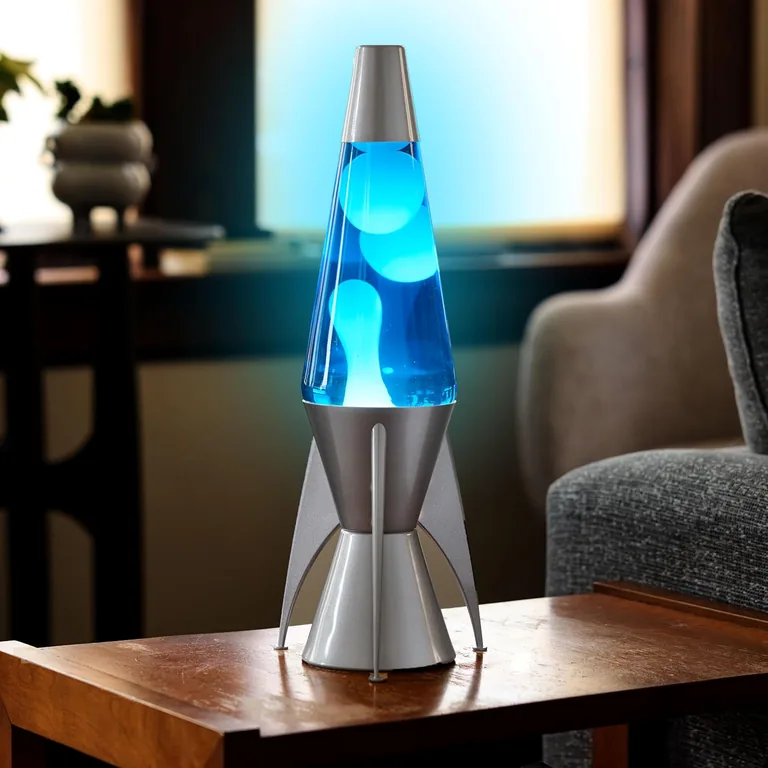
For an echo, start with a color or material you already enjoy. The cooler look of Gray Stratosphere can sit beside other metal details. Night Swim offers a blue palette that may connect with a print, a cushion or a painted shelf. The connection does not need to be exact; it simply gives the eye something to recognize.
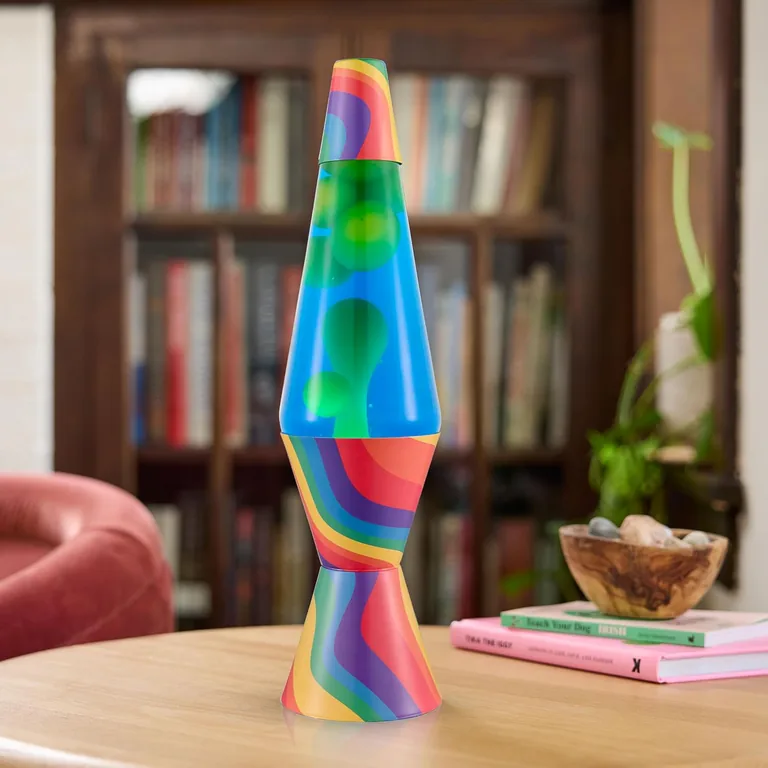
For contrast, let the lamp be the expressive object in a quieter group. Warped Rainbow brings multiple colors and a curved pattern. Trippy Shrooms adds illustrated mushroom details, while Grinning Globs uses smiling artwork and warm color. Give those finishes enough visual space that their details do not disappear among equally busy objects.
A printed base stays part of the room even when the lamp is off. That matters if it will spend much of the day on a desk or visible shelf. Look at the base close-up as carefully as the glowing globe. If you enjoy the finish on its own, the lamp can still feel at home between operating sessions.
Neon finishes create another kind of contrast. The bright exterior of Neon Green or Neon Pink frames a different color combination inside. Their glow-in-the-dark finish is a separate characteristic from the powered lamp effect. Do not choose them on the assumption that the wax motion works without the bulb or power cord.
These are styling suggestions, not claims about brightness, health benefits or how a room must look. A lamp does not need to make a space more productive or improve sleep to be a worthwhile decorative choice. It can simply be an object whose color and movement you like watching.
Prepare for the first switch-on
Before operating a new lamp, unpack it carefully and read the instructions that come with that model. Keep the packaging while you inspect the glass, base, cord and included parts. If anything is damaged or leaking, leave the lamp unplugged and use the support options associated with the purchase.
Set up the lamp on its chosen surface while everything is cool. Follow the assembly and bulb instructions rather than improvising from a photograph. Similar-looking lamps can use different parts, and the product’s own instructions are the right reference for how those parts should fit together.
For a wax lamp, the first session involves waiting. The wax needs to warm before the familiar motion develops, and a first run may differ from later sessions. The manufacturer’s FAQ notes that initial operation can take longer than a shopper might expect. Avoid treating the first few minutes as a verdict on the lamp.
“Do not run lamp for longer than 10 hours at a time.”
LAVA US instruction manual
Use the limit in the instructions supplied with your exact lamp, and turn it off sooner if those instructions direct you to. Do not leave it running overnight simply because you are waiting for a particular shape. A decorative session has a beginning and an end; cooling is part of normal use.
Leave the lamp still while it operates. Shaking, moving or opening the globe is not a shortcut to the intended effect. If the wax looks unfamiliar during warm-up, consult the model’s guidance and allow the appropriate time instead of adding heat, changing the bulb to a higher wattage or trying to alter the sealed contents.
Glitter lamps should be approached with their own instructions. Polar Glimmer’s effect is made by reflective particles, not the large wax shapes described above. Its product page identifies it as glitter motion so you can make that distinction before buying and avoid applying the wrong expectations once it arrives.
Keep care simple and model-specific
The most useful habits are straightforward: keep the lamp in an appropriate location, use the specified bulb, leave the sealed globe closed and let the lamp cool before handling it. None of those habits requires modifying the lamp. If you are uncertain, stop and check the instructions before taking the next step.
A replacement bulb needs to match more than a wattage number. Shape, base and the lamp’s specified type matter too. Our selected products include a 25-watt bulb, but that does not mean every 25-watt bulb is interchangeable. Use the model information and the supplied manual when choosing a replacement.
Do not assume that an LED substitute will provide the same result in a heat-driven wax lamp. The bulb is part of how the lamp operates, not merely a source of visible light. Follow the specified replacement rather than choosing only by brightness, advertised energy use or what happens to fit the socket.
Before cleaning or changing a bulb, unplug the lamp and allow it to cool for the period required by its instructions. Keep water away from electrical parts. Avoid abrasive cleaning methods or solvents that could damage a printed or painted finish. If a cleaning method is not described for the model, ask the manufacturer before trying it.
If you notice damage, leakage or a problem that the instructions do not resolve, do not keep experimenting. The contact page links to the manufacturer’s published support information. Have the model details available so the question can be answered for the actual lamp rather than a vaguely similar product.
“The Shape of Cool”
LAVA brand phrase
The familiar shape is a useful visual reference, but it is not a substitute for identifying the model. Save the instructions and product information after unpacking. Those details help later if you need the correct bulb, have a care question or want to explain which finish and globe combination you own.
Choose a gift around the person’s space
A lamp can be a personal gift without requiring you to guess every detail of someone’s decor. Start with a color they already choose for themselves, then consider the kind of objects they like. Someone with a collection of colorful prints may enjoy an illustrated base, while a simpler metal finish may fit a more restrained desk.
Think about where it could realistically go. A person in a small room may have limited safe surface space or few accessible outlets. A lamp is easier to enjoy when there is an obvious place for it, with enough room around the globe and a cord route that does not cross a walkway.
Be careful about gifting by age alone. These are electrical decorative lamps with parts that become hot during use. A playful pattern is not evidence that a model is suitable as a toy or safe for unsupervised use by a child. Check the exact product instructions and any age guidance before making that decision.
If the recipient specifically wants a classic lava effect, choose a wax model rather than assuming a glitter lamp is equivalent. If sparkle is the attraction, show them Polar Glimmer. The surprise can still be the finish or color; the basic kind of motion should match what they are hoping to see.
Check the delivery estimate and return terms in the purchase tab before ordering for a particular occasion. Save the order information and follow the purchase service’s gift options where available. We do not promise a delivery date or return window on this site because those details depend on the final offer and order.
A final check before you choose
Return to the exact product page once you have narrowed the selection. Review the lamp name, color combination, height and included bulb. Open the enlarged photographs instead of relying only on the small catalog image. The purpose is to confirm the model you want, not just a lamp that shares its most noticeable color.
| Check | Ask yourself |
|---|---|
| Motion | Do I want wax shapes or glitter reflections? |
| Color | Have I checked the globe, liquid and base separately? |
| Location | Is there a stable indoor spot with a safe cord route? |
| Care | Am I comfortable with warm-up, cooling and the supplied operating limits? |
| Order | Does the purchase tab show the exact option and acceptable delivery terms? |
The “Price checked” label beside a lamp shows a saved reference price. It is useful for comparing the selection, but it is not a live quote or a held offer. Confirm the final selected-option price, seller, available stock and delivery charges in the purchase tab before completing an order.
Our purchase buttons open a separate tab, so you can keep the product photographs and this guide available while checking the offer. If the option shown there differs from the one you intended, pause and verify it. A shared product family can include different colors or finishes, and the final selected option matters.
Once those practical details are settled, the remaining choice can be simple: pick the lamp you want to look at. A purple globe, a blue rocket or a rainbow-patterned base each brings a distinct character to the same everyday space. Browse all lamps, explore the color and pattern collection, or return to wax motion lamps to compare your favorites.